
October 13, 2026
You might assume a limited budget rules out digital advertising. Maybe you envision four- to five-figure ad spends, high-priced creative production and complex multi-channel campaigns. But that’s a myth. A small budget, even just a few dollars a day, can deliver real, measurable results when spent strategically.
Digital advertising doesn’t require deep pockets, but it does demand focus. Success comes down to three choices: the platform, the goal and the creative. Continue reading to learn how to combine these choices into a strategy that makes every dollar count.
Key Takeaways
Start with one platform. Advertise where your target audience actively spends time, not where you personally scroll.
Pick a single, measurable action. Avoid vague goals like “raising awareness” in favor of direct actions or conversions.
Use the creative you already have. Authentic photos and videos shot on your phone often outperform polished stock media.
Digital Advertising Case Study
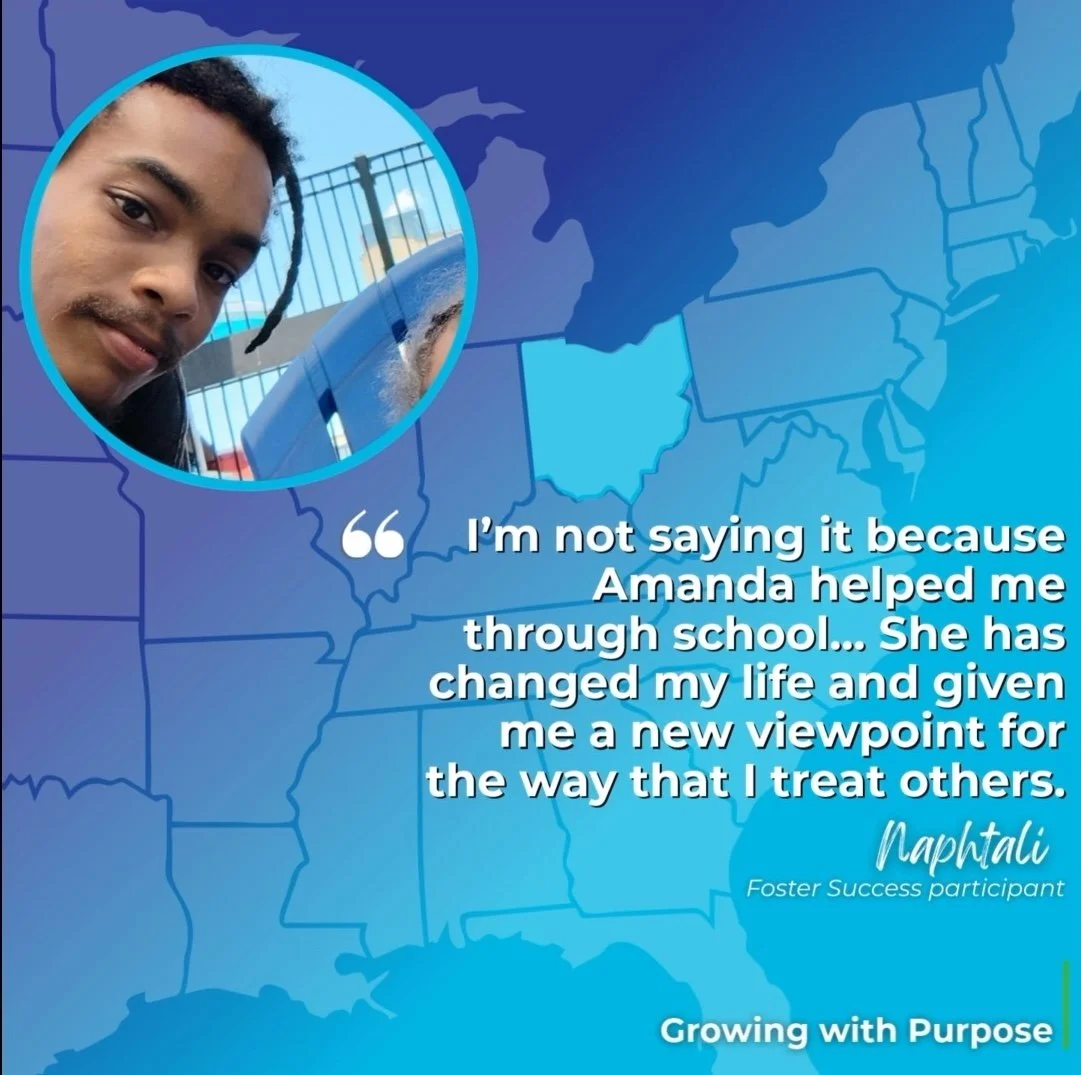



Foster Success wanted to reach potential donors in four new markets to support their year-end development goals. Line One built a targeted video campaign on Facebook and Instagram to do both. The full media investment was roughly $830.
Read the full case study here.
How Much Does Digital Advertising Cost?
Most digital advertising platforms let you start with $5 to $20 a day*. You don’t need a massive upfront commitment to get started and begin testing what works.
*Minimum thresholds differ across platforms.
Platform-specific starting budgets
| Platform | Recommended Starting Budget |
|---|---|
| Meta (Facebook/Instagram) | About $5 to $20/day |
| Google Search | About $10 to $20/day |
| TikTok | $50/day per campaign* |
| $10 to $33/day |
*TikTok requires a minimum budget of $50/day per campaign and $20/day per ad group.
What does a small budget actually buy?
A $10 daily budget adds up to $70 a week and about $300 a month. The organization in our case study above spent $830 over two months and paid roughly 85 cents for each person who visited their landing page.
Depending on your audience and industry, each website visit from a digital ad could cost anywhere from less than a dollar to $10 or more. At $10 per visit, the same $830 our case study organization invested would bring about 83 visitors instead of 978. Variables like industry competition, audience targeting and ad creative can impact how expensive or cheap the intended action is.
Don’t let a high cost-per-landing page view (CLPV) discourage you. The longer your ads run, the more the platform learns about your audience, and your CPLV often drops as a result.
How budgets work inside the ad platforms
You set your spending limit before your ads go live, so you are in control of the total cost. Most platforms offer two budget types — daily and lifetime. A daily budget sets the average amount you want to spend each day, and your ad runs indefinitely until you pause the campaign. A lifetime budget sets the total amount to spend, and the platform spreads it from your campaign’s start date to the end date you choose.
Spending may fluctuate day to day based on when your audience is most active. Your campaigns may not spend the same amount each day. Instead, the platform saves budget for when your audience is most likely to act. On Meta, some days' spend will run up to 75% higher than your daily budget, but your total weekly spend won’t exceed seven times the daily amount. Google works in a similar way. Your campaign’s actual spend may reach up to twice your average daily budget, but Google won’t charge you more than your monthly limit (which is equal to your daily budget multiplied by 30.4).
Note for Nonprofits:
If you represent a 501(c)(3) nonprofit, you may be eligible for the Google Ad Grants program, which provides up to $10,000 per month in search ads shown on Google.com to amplify your mission.
What's the Best Platform for Digital Ads on a Small Budget?
The best platform for digital advertising is the one where your target audience already spends their time. Limited funds buy you a finite number of chances to capture someone’s attention, and you pay for the impression or click, whether the audience is relevant or not. It’s much easier and less wasteful for your organization to join the conversation where your audience is already comfortable engaging than it is to encourage them to adopt a new platform. This might mean launching ads on a platform you don’t personally scroll.
This is why it’s important to deeply understand your audience — not just who they are demographically but also their motivations, challenges, goals, interests and behaviors (also known as psychographics). Demographics and psychographics show you which platform will best reach your audience.
Top platforms by user engagement
If you run a small business, nonprofit or work for yourself, Meta serves as the default starting point. It offers low daily entry costs, intuitive campaign management tools and an active user base spanning nearly every demographic.
| Generation | Platform (% who use it) |
|---|---|
| Gen Z (18-29) | YouTube (95%), Instagram (80%), Facebook (68%), TikTok (63%) |
| Millennials (30-49) | YouTube (92%), Facebook (80%), Instagram (62%), TikTok (44%) |
| Gen X (50-64) | YouTube (85%), Facebook (74%), Instagram (40%), TikTok (30%) |
| Baby Boomers (65+) | YouTube (64%), Facebook (57%), Instagram (19%), TikTok (12%) |
When does TikTok or LinkedIn make sense?
TikTok is a strong option if you sell visually compelling consumer products or want to tap into influencer partnerships. According to Sprout Social, 58% of TikTok users use the platform for shopping inspiration. However, keep in mind that higher daily ad minimums mean your budget won’t stretch as far.
LinkedIn shines for B2B services, executive recruiting and niche professional offers. However, high cost-per-click rates mean it can burn your small budget quickly without generating enough volume.
Start with one platform, then expand
Splitting your already-limited budget starves each platform. A $10 a day budget on one platform now becomes about $3 a day across three. At this amount, each platform’s algorithm won’t get enough data to learn about your target audience and optimize accordingly — and may fall below some platforms’ minimums.
Focusing on one platform not only strengthens your budget capacity but also reduces administrative overhead. Each platform has its own learning curve so you (or whoever runs your digital ads) must learn different settings, terms and metric screens. Mastering one platform before adding another saves time and prevents costly setup mistakes.
Strong results on one platform build your case for additional budget and campaign expansion. Use your first campaign platform as your playbook — compiling your learnings and insights to launch the second platform with an evolved strategy.
What Should be the Goal of My Digital Ads?
The goal of your digital ads should be specific. Replace “raise awareness” with a measurable action like landing page visits, PDF downloads, information requests, newsletter signups or event RSVPs.
If there is a single mistake that destroys small ad budgets, it’s choosing a vague campaign goal. Digital ad goals work on two levels. Your team sets the goal based on business objectives, then you select it in the platform as the campaign objective.
When you choose an objective, the platform's machine learning algorithm looks for the people most likely to take that exact action. Pick Engagement, and the algorithm finds people who like, comment and share but rarely click through to your website. Pick Traffic, Leads or Sales, and it searches for the people most likely to visit your site, fill out a form or make a purchase.
That doesn't mean awareness campaigns have no place. The awareness objective shows your ad to as many people in your audience as possible, which can help when you're launching something new, entering a new community or building name recognition before a bigger push. On a small budget, though, awareness results can be hard to tie back to your goals. Reach and impressions show how many people saw your ad, not whether anyone acted on it. Start with an objective tied to a measurable action, then add awareness campaigns once you have the budget and a clear reason to use them.
Common campaign objectives and related success metrics
| Objective | Choose it when you want people to... | Key success metrics |
|---|---|---|
| Awareness | See your ad and remember your name | Reach, impressions, frequency, cost per 1,000 impressions (CPM) |
| Traffic | Visit your website or landing page | Landing page views, cost per landing page view, click-through rate (CTR), cost per click (CPC) |
| Engagement | Interact with your ad, watch a video, RSVP to an event or send a message | Engagements, cost per engagement, video views, event responses, messages started |
| Leads | Share their contact info through a newsletter signup, information request or download | Leads, cost per lead, form completion rate |
| Sales | Buy, donate or complete a purchase on your website | Purchases or donations, cost per purchase, return on ad spend (ROAS) |
Without a specific goal, you can’t measure a campaign properly and there is no finish line. Digital ad campaigns offer seemingly infinite metrics often leading to analysis paralysis when you can’t choose which metrics determine success. You also have no way to know when or how to pivot leading to a potential failure and wasted spend.
Note: Form submissions only show in the platform if the campaign tracks them, either through a lead form built into the ad or through a tracking pixel on your website. If the conversion happens on your landing page or another external website without the pixel installed, you will need to count submission on your own.
Do I Need Professional Photos or Videos to Run Digital Ads?
No, you do not need professional photos or videos for digital ad campaigns. Authentic content shot on a smartphone often outperforms glossy stock photos and expensive video productions. In a Meta study reported by Shuttlerock, self-recorded videos drove more views than studio-shot videos 84% of the time.
Social media users scroll through their feeds to see updates from friends, family and creators they follow. Highly polished stock imagery screams “AD” and causes users to instantly scroll past.
Why phone content wins in feeds:
It blends in naturally. Casual photos feel organic to the platform, catching users’ interest before their natural ad-defense kicks in.
It showcases real work. Showing your actual team, office space or product provides immediate proof of authenticity.
It is unique. Anyone can license the same stock imagery — including your competition. Your own photos belong exclusively to you and your company.
It costs nothing to produce. When creative production is free, you can easily test three or four variations of an ad to double down on the winner.
It’s fast. You can capture a customer testimonial or quick product feature this afternoon and launch a campaign tomorrow.
Quick Tips to Get Started:
- Record a simple 15-second video interviewing an employee or answering a common customer question.
- Pair a candid photo of your workspace with a bold text quote overlay using free tools like Canva.
- Test both a short Reel video format and a static photo image to see which format your audience responds to best.
How Do I Know If My Digital Ads Are Working?
You know your ads are working when people take the action you chose as your goal, at a cost that makes sense for your budget. Other metrics help you get there. Rising reach and impressions show the platform is putting your ad in front of people. A healthy click-through rate shows your ad is catching their attention. But your conversions and cost per conversion tell you whether the campaign is actually succeeding.
According to WordStream's 2026 benchmarks, the average Facebook traffic campaign costs $0.60 per click, while lead campaigns average $1.80 per click.
Give your ads about one week of runtime before evaluating performance. When reviewing, focus on whether users are taking your intended action.
Ask these three questions to evaluate your campaign:
Are people seeing it? (Reach/impressions)
Are people clicking? (Clicks/click-through rate (CTR)/cost per click (CPC))
Are people taking action? (Conversions*/ conversion rate (CVR) / cost per acquisition (CPA))
*Conversions can be various form submissions like PDF downloads, newsletter signups or event registrations.
If your target audience still isn’t clicking or taking the intended action over time, try refreshing your digital ad messaging or creative. Change one ad element at a time to A/B test a photo or new headline to better determine what resonates with your audience. Never change two ad elements at the same time, or you won’t know which adjustment improved performance.
Remember: you can only measure effectiveness if you defined your goal and success metrics before launching the ads.
You don’t need a bigger budget. You need more clarity. Narrow your focus to one platform, one goal and authentic creative shot on your phone. You’ll be able to run effective campaigns on a small budget.
If you need help developing your digital ad strategy, contact us and we’re happy to help.
Frequently Asked Questions
Q. Is $10 a day enough for digital ads?
A. Yes. A $10 daily budget adds up to about $70 a week and $300 a month, which is enough to reach real people. The organization in our case study invested $830 over two months in Facebook and Instagram ads, reached 73,000 potential new supporters and paid roughly 85 cents for each landing page visit. Your results will depend on your industry, audience targeting and ad creative.
Q. How long should I run an ad before changing it?
A. Give your ad at least one week before you make adjustments. This gives the platform time to learn about your audience and optimize delivery, and it gives you enough data to judge performance accurately. When you do make a change, adjust one element at a time so you know what made the difference.
Q. Should I advertise on more than one platform?
A. Not at first. Start with the one platform where your audience already spends their time. Splitting a $10 daily budget across three platforms leaves about $3 a day for each, which doesn't give any platform enough data to optimize. Once you see strong results, use what you learned as a playbook to expand.
Q. Is LinkedIn advertising worth it on a small budget?
A. Usually not as a starting point. LinkedIn works well for B2B services, executive recruiting and niche professional offers, but its high cost per click can burn through a small budget quickly. Most organizations will stretch their dollars further by starting on Meta.